# Management and reporting

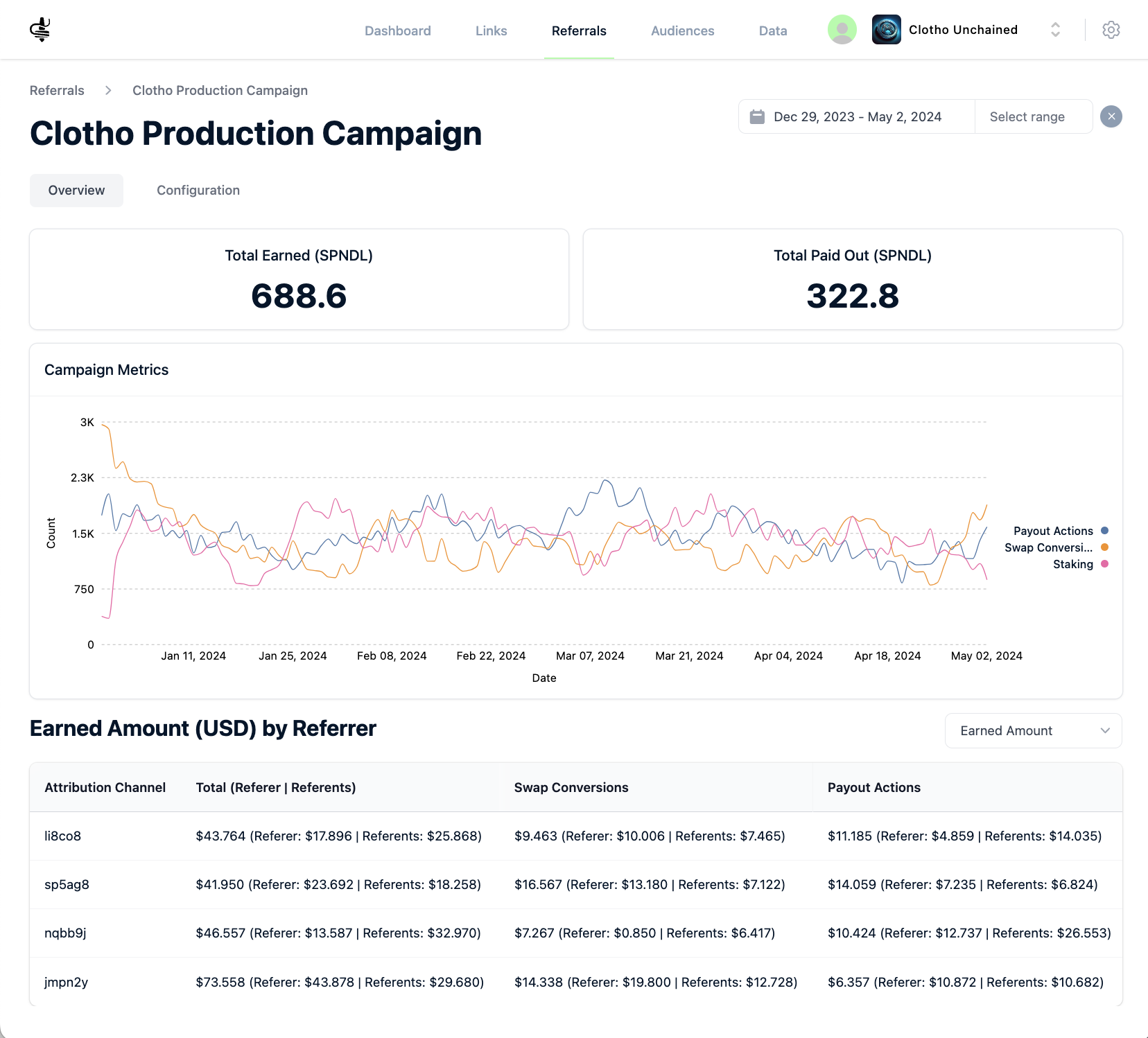
A referral system is a natural add-on to a proper attribution system, as it's effectively adding a business model to the question of "who brought in this user?"\
\
That referrer can be anyone: an influencer, a popular community member, or even a publisher like CoinGecko (the biggest referrer on the GMX referral system). The attribution is effectively agnostic: every referrer, whether KOL or *The New York Times*, is treated equality in the attribution system as yet another channel. \
\
You can pay out the referrer as a bounty (i.e. CPA), or what we call [CPV](https://blog.spindl.xyz/p/cost-per-value-cpv-a-new-media-business) (a revenue share on user value). You can do tiers based on volume (e.g. bounty A if the referred user trades up to X amount, and bounty B if it's more). You can do practically anything: if it's onchain (or even offchain), Spindl can measure it and build a referral model around it. <br>
<figure><img src="/files/UWmFd67pwy8oV00tVWUj" alt=""><figcaption></figcaption></figure>


---

# Agent Instructions: Querying This Documentation

If you need additional information that is not directly available in this page, you can query the documentation dynamically by asking a question.

Perform an HTTP GET request on the current page URL with the `ask` query parameter:

```
GET https://docs.spindl.xyz/spindl/features/referrals/management-and-reporting.md?ask=<question>
```

The question should be specific, self-contained, and written in natural language.
The response will contain a direct answer to the question and relevant excerpts and sources from the documentation.

Use this mechanism when the answer is not explicitly present in the current page, you need clarification or additional context, or you want to retrieve related documentation sections.